
Tankless vs. Tank Water Heaters for Portland Homes
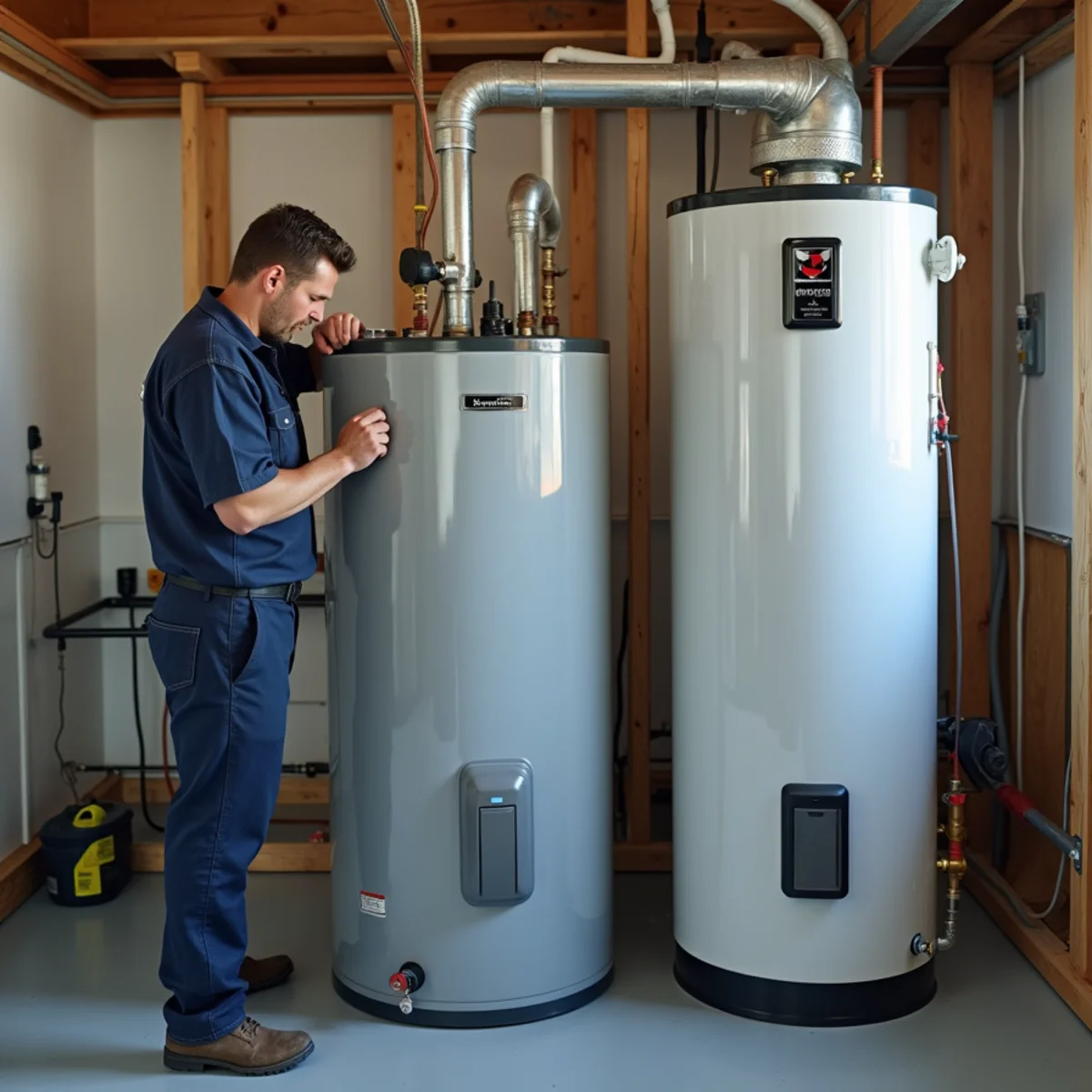
For Portland homeowners, choosing between a tankless and tank water heater depends on household hot water demand, available budget, and energy efficiency goals. Tankless water heaters cost more upfront ($3,800–$6,500 installed) but provide continuous endless hot water, last 20+ years, use up to 34% less energy, and save valuable floor space. Traditional tank water heaters cost less ($1,800–$3,400 installed), install quickly, and operate reliably during power outages (on gas models), but last only 8–12 years and suffer standby heat loss.
- Tankless water heaters deliver endless hot water on demand, eliminating cold shower syndrome for large families.
- Tankless units last 20+ years with annual descaling, compared to 8–12 years for conventional storage tanks.
- Traditional tank heaters cost roughly half as much upfront and require simpler gas or electrical infrastructure.
- Energy Trust of Oregon offers cash rebates and federal tax credits that offset the initial cost of high-efficiency tankless models.
When your existing water heater begins failing, one of the biggest dilemmas you will face is whether to replace it with another conventional 50-gallon storage tank or upgrade to a modern high-efficiency on-demand tankless system.
In the Pacific Northwest, both technologies have distinct advantages and trade-offs. Here is how they stack up for Portland homeowners.
Traditional Storage Tank Water Heaters: Storage tanks heat and store 40 to 75 gallons of water continuously. Pros: Lower initial installation investment ($1,600 to $2,800), simple mechanical components, and reliable performance during power outages if using self-powered standing pilot gas units. Cons: Higher monthly operating costs due to continuous standby heat loss, limited hot water capacity (running out during back-to-back showers), bulky footprint that takes up 12 to 16 square feet of basement floor space, and a shorter lifespan (8 to 12 years).
On-Demand Tankless Water Heaters: Tankless units heat water instantly only when a faucet opens. Pros: Endless hot water supply, 20+ year lifespan, compact wall-mounted footprint that frees up valuable floor space, 25% to 35% lower monthly gas consumption, and eligibility for generous Energy Trust of Oregon rebates. Cons: Higher initial installation cost ($2,800 to $5,400) and requires annual descaling flushes to remove mineral buildup.
The Portland Winter Temperature Factor: In Portland, winter groundwater temperatures drop to 42°F to 48°F. To deliver a 120°F shower, a tankless unit must generate a 75°F temperature rise. Properly sizing the unit's BTU burner capacity (we recommend 199,000 BTU models from Navien or Rinnai) ensures full multi-fixture flow even during freezing weather.
Contact United Plumbing PDX at (831) 290-4327 for a tailored water heating consultation.
Comprehensive Technical Guide & Portland Field Insights
1. How Tankless Water Heating Works in the Pacific Northwest
Unlike storage tanks that continuously burn energy keeping 40 to 50 gallons of water hot 24 hours a day, a tankless water heater operates strictly on demand. When you open a hot water tap, cold water flows through a high-efficiency copper or stainless steel heat exchanger, where high-output gas burners or electric elements instantly elevate the water temperature to your desired setpoint (typically 120°F). In Portland, our winter groundwater entering the home can be as cold as 40°F to 45°F, requiring a powerful heating system (typically 180,000 to 199,000 BTU) to provide a 75°F temperature rise at high flow rates.
2. Energy Efficiency & Environmental Impact
According to the U.S. Department of Energy, tankless water heaters are 24% to 34% more energy efficient than traditional storage tanks for homes using 40 gallons or less of hot water daily, and 8% to 14% more efficient for homes with heavy hot water usage. Eliminating standby heat loss saves Portland households between $100 and $250 annually on gas bills.
3. Space Savings in Basements and Finished Utility Closets
In older Portland Craftsman homes and compact modern ADUs (Accessory Dwelling Units), basement and utility square footage is precious. A bulky 50-gallon tank occupies roughly 10 to 12 square feet of floor space. In contrast, a wall-hung tankless unit is about the size of a carry-on suitcase, freeing up valuable floor space for storage, workshops, or finished living areas.
4. Maintenance Requirements: The Annual Descaling Flush
While tankless water heaters boast 20-year lifespans, they demand annual preventative maintenance. As water flash-heats inside the compact heat exchanger, trace calcium and magnesium minerals precipitate onto internal copper walls. Homeowners must perform an annual descaling flush using food-grade white vinegar or citric acid pumped through isolated service valves to dissolve scale buildup and maintain heat transfer efficiency.
5. Upfront Installation Considerations for Portland Homes
Converting from a tank to a tankless unit requires specialized infrastructure upgrades: (1) Increasing gas supply lines from 1/2-inch to 3/4-inch or 1-inch to satisfy the 199,000 BTU burner demand; (2) Installing dedicated two-pipe concentric PVC/polypropylene venting through exterior walls; and (3) Supplying a dedicated 120V electrical outlet for the unit's digital control board and exhaust fan.
“For families of four or more who run out of hot water during morning routines, or for homeowners finishing their basements who need floor space, a tankless water heater is a game-changer. For empty-nesters with modest hot water needs, a quality Bradford White tank heater or a hybrid heat pump unit is often the smarter financial choice.” — Mark Evans, Master Plumber (CCB #234891)
Frequently Asked Questions About Tankless vs. Tank Water Heaters for Portland Homes
Does a tankless water heater deliver hot water instantly?
Tankless heaters provide endless hot water, but they do not deliver water instantly to distant fixtures unless paired with an internal or external recirculation pump that keeps water moving through supply lines.
Can a tankless water heater handle multiple showers at once in winter?
Yes, provided it is properly sized. A 199,000 BTU natural gas unit can deliver 5 to 7 gallons per minute of hot water even with Portland's cold 45°F winter groundwater, easily running two showers and a dishwasher simultaneously.
Do tankless water heaters work during power outages?
Standard tankless gas water heaters require electricity to operate electronic control boards, ignite burners, and power exhaust fans. They do not operate during blackouts unless connected to a portable generator or battery backup.
How long does a tankless water heater last in Portland?
With proper annual descaling and maintenance, high-end tankless units (Navien, Rinnai) routinely last 20 to 25 years, more than double the lifespan of conventional tanks.
Related Services & Local Coverage
Written by Mark Evans
Licensed Oregon Master Plumber · CCB #234891. Mark has overseen thousands of residential and commercial plumbing restorations throughout Multnomah County and the Willamette Valley.
Dealing With an Active Plumbing Issue?
Call United Plumbing PDX now at (831) 290-4327 for live 24/7 dispatch across the Portland metro area.